

As demand for precise, minimally invasive ophthalmic procedures (e.g., cataract and glaucoma surgery) continues to rise worldwide, the Ophthalmic Viscosurgical Device (OVD) market is steadily expanding. Precedence Research estimates that the global market was valued at USD 543.28 million in 2024 and is projected to reach USD 806.5 million by 2034[1]. Straits Research estimates that the market size was valued at USD 467.77 million in 2025 and will reach USD 763.85 million by 2034[2].
For hospital procurement teams, distributors, and surgical consumables suppliers, this growth trajectory means that OVDs are gradually becoming a product category worth developing over the long term. For companies seeking sodium hyaluronate raw materials or customized finished products, looking for partners for prefilled syringe systems, or planning to expand their ophthalmic surgical consumables portfolios, this segment deserves attention in the coming years.
HAFILLER is a product brand of Jingjia Medical, focused on researching and manufacturing sodium hyaluronate products, offering sodium hyaluronate-based OVDs for this specialized surgical field.
What Is an OVD and Its Application Trends
An Ophthalmic Viscosurgical Device (OVD), also known as viscoelastics, is a sterile viscoelastic material used during intraocular surgery. ISO 15798:2022 defines OVDs as invasive medical devices with viscous or viscoelastic properties that help create and maintain space, protect intraocular tissues, and assist with tissue manipulation in anterior-segment surgery[3].
These are dual-property solutions, exhibiting both the viscosity of a fluid and the elasticity of a gel or solid. They have also been described as having viscous, elastic, and pseudoplastic properties.
Sodium hyaluronate is one of the earliest viscoelastic substances used in ophthalmic surgery[4].
In surgery, an OVD may help to:
• Maintain anterior chamber depth
• Protect intraocular tissues
• Support pupil dilation
• Prevent vitreous prolapse
• Assist with hemostasis
• Prevent postoperative adhesions
Common Surgical Applications
OVDs are used across several ophthalmic procedures, such as:
• Cataract extraction(e.g., intraocular lens implantation, intracapsular and extracapsular extraction, phacoemulsification)
• Glaucoma surgery
• Corneal surgery
• Retinal surgery
• Vitreous surgery
• Ophthalmic surgical procedures
• Foreign body removal
• Lacrimal duct dysfunction, among others
Among these, cataract surgery remains the largest current application area for ophthalmic viscoelastics, with glaucoma surgery emerging as a growing segment[5].
Common OVD Classifications, Raw Materials and Extraction, and Performance Validation
Main OVD Types
From a rheological standpoint, OVDs are generally divided into three categories:
Type | Main Behavior | Typical Surgical Role |
Cohesive | Maintains space well and tends to remain as a unified mass | Chamber formation, capsulorhexis, IOL implantation |
Dispersive | Spreads across and remains on tissue surfaces | Corneal endothelial protection |
Viscoadaptive | Changes behavior according to shear conditions | Procedures requiring both space maintenance and tissue protection |
Raw Material Sources and Extraction Processes
Beyond rheological classification, the source of the raw material used to produce sodium hyaluronate also affects a product’s final performance. Two production routes are currently used in the industry:
• Animal tissue extraction (e.g., rooster combs, bovine vitreous)
• Bacterial fermentation
Compared with extraction from animal tissues, fermentation is better suited to large-scale production and enables more precise control of molecular weight distribution. It is therefore also better suited to the development of customized formulations for combined procedures involving cataracts, glaucoma, and other conditions[5].
HAFILLER uses the bacterial fermentation route. Specific process parameters include:
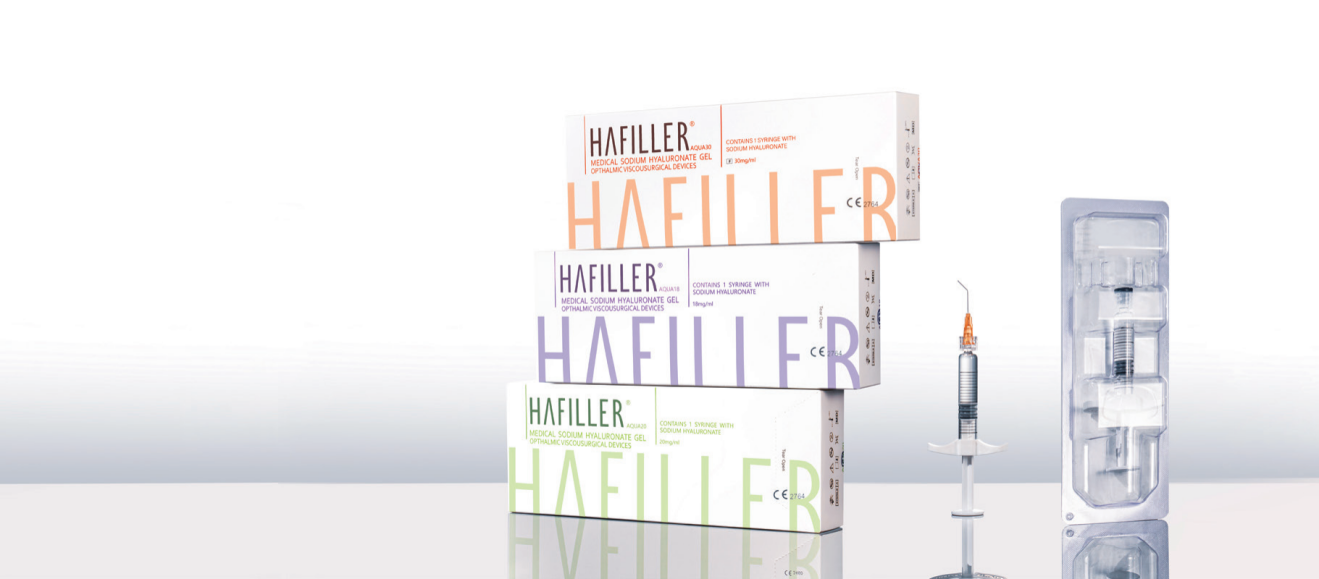
HAFILLER Viscoelastic Solution for Ophthalmic Surgery
• Raw material molecular weight controlled within the 1.6–1.8 million dalton range, balancing viscoelastic performance with postoperative intraocular pressure recovery speed; viscoelastic and related performance indicators improved by 57.5% compared with conventional processes
• Protein impurity content 98.2% lower than typical viscoelastic products
• Product specifications: concentration of 13mg/ml–30mg/ml, fill volume of 0.5ml–2.0ml
HAFILLER OVD Product’s Cohesive Design and Performance Validation
In addition, HAFILLER’s OVD products are designed as cohesive, viscoelastic materials. Related design parameters and validation data include:
• CE certification (CE0434) obtained from the European Union on November 14, 2008, following a series of quality system certifications and product testing
• A case series covering 1,102 patients (567 right eyes, 535 left eyes, ages 5–85)undergoing cataract and glaucoma surgery, used to observe postoperative corneal endothelial cell loss rates and early complications
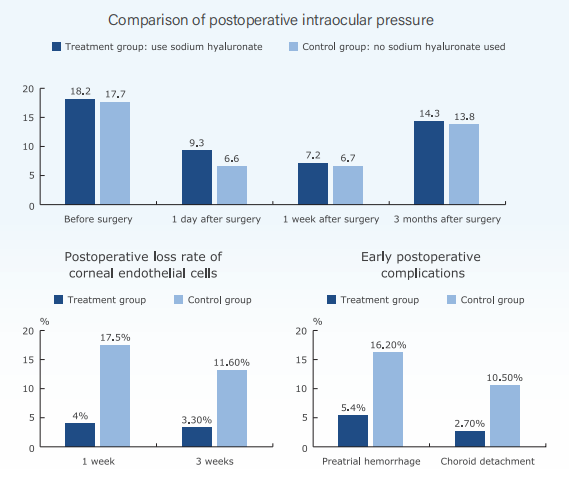
• Postoperative intraocular pressure elevation typically peaks 6–12 hours after injection and stabilizes within 24 hours
• As the first domestic manufacturer to introduce GMP standards and the third-largest OEM facilityin Asia, the product is manufactured to pharmaceutical-grade professional standards, with an allergy incidence rate below one in a million
For procurement teams currently evaluating OVD suppliers or seeking customized sodium hyaluronate solutions, please contact the HAFILLER team directly for more detailed technical information or sample-testing programs.
Having established the clinical fundamentals, it is also necessary to examine how these products are regulated, because regulatory compliance determines which OVDs can actually enter a given market and reach physicians.
OVD Regulatory Requirements in Different Countries and Regions
Because ophthalmic viscoelastics are injected directly into the eye, bringing a product to market requires a fairly complete set of technical and quality documentation.
Market | General Regulatory Pathway |
International | ISO 15798:2022 as the dedicated OVD technical standard |
United States | FDA Class III surgical viscoelastic, product code LZP; PMA pathway |
European Union | EU MDR classification, technical documentation, clinical evaluation, and conformity assessment |
China | NMPA Class III medical-device registration requirements |
ISO 15798:2022 covers intended performance, design, preclinical and clinical evaluation, sterilization, packaging, and information supplied by the manufacturer.
For manufacturers and distributors, registration capabilities, sterility assurance, manufacturing consistency, traceability, and technical documentation all directly affect market access.
OVD Market Conditions and Opportunities in Different Countries and Regions
Key Growth Drivers
The following factors are frequently cited in industry analyses as major drivers of OVD demand, although actual market growth is generally the result of multiple factors acting together:
• Rising prevalence of age-related eye diseases in aging populations, with cataract, the most common age-related eye disease, showing significantly higher prevalence with age
• Global cataract surgery volumes remaining at high levels, the primary source of OVD demand
• Conditions such as keratoconus and Fuchs’ endothelial corneal dystrophy driving increased corneal transplant procedures, correspondingly raising OVD use
• Growth in the number of ophthalmology clinics, increasingly important end users for premium OVDs, particularly in premium IOL implantation procedures
• Rising demand from vitreoretinal and other procedures for formulations with longer retention time and higher biocompatibility, driving the emergence of new OVD products
Because surgical volumes, healthcare infrastructure, and the pace of regulatory market access differ across regions, market opportunities also vary considerably.
OVD Market Conditions and Opportunities by Region
Key Takeaways: • North America currently holds a dominant share of the global market • Multiple reporting agencies project Asia-Pacific to become the fastest-growing regional market for OVDs • Within Europe, Germany stands out for surgical penetration, while France is driven by medical tourism • Emerging markets such as China, India, and Brazil continue to expand on the back of aging populations and local manufacturing |
North America. North America is currently the leading region in the global OVD market. This is largely attributable to the high prevalence of age-related eye diseases such as cataracts, advanced healthcare infrastructure, and the presence of several major market participants. Relatively favorable regulatory policies and mature healthcare reimbursement systems further support market demand. However, the FDA Class III medical device classification and PMA premarket approval requirements continue to pose relatively high regulatory barriers for new entrants.
Asia-Pacific. Asia-Pacific is considered the fastest-growing regional market, primarily driven by increased healthcare investment, expansion of medical infrastructure, and rising incidence of ophthalmic diseases such as cataracts and glaucoma. Greater adoption of premium OVDs by ophthalmology clinics and hospitals, together with the pricing advantages created by localized manufacturing, is contributing to continued market expansion in the region.
China. China’s large and continuously growing elderly population has significantly increased demand for cataract and glaucoma procedures, making the country an important participant in the OVD market. Government investment in healthcare infrastructure and the growth of private medical institutions have further accelerated product adoption. Local manufacturers have also expanded product accessibility by offering more cost-effective alternatives.
Germany. With its mature ophthalmic healthcare system, strong research capabilities, and high surgical penetration rate, Germany is an important European market for OVD applications.
France. The French ophthalmic market benefits from the growth of medical tourism, particularly in the field of vitreoretinal surgery. Rising surgical demand associated with age-related macular degeneration has further increased demand for both dispersive and cohesive OVDs.
Japan. Japan’s ophthalmic market is moving toward more advanced surgical technologies, particularly in corneal transplantation. Innovative healthcare infrastructure and the rising prevalence of corneal diseases are jointly driving demand for premium OVD products.
India. India’s ophthalmic viscosurgical device market is expanding rapidly due to its growing elderly population and increasing prevalence of cataracts.
Brazil. Brazil is the largest ophthalmic market in Latin America, driven by the rising prevalence of eye diseases and the growing elderly patient population. As the healthcare system continues to develop, both public- and private-sector adoption of advanced OVD products is increasing, while government initiatives continue to support greater accessibility to ophthalmic care.
About Jingjia Medical and HAFILLER
Since 1995, Jingjia Medical has focused on research and development in hyaluronic acid. Over the years, we have developed mature technologies for hyaluronic acid cross-linking and purification, enabling us to effectively control impurity levels in finished products. These capabilities help improve postoperative absorption and removal, reduce residual material, and minimize the potential risk of allergic reactions.
This technological foundation has also supported our expansion into the ophthalmic viscosurgical device segment. HAFILLER, our product brand, offers sodium hyaluronate OVD products in concentrations of 13 mg/mL to 30 mg/mL and fill volumes of 0.5 mL to 2.0 mL. Our OVD products are suitable for a wide range of clinical applications, including cataract surgery, corneal surgery, vitreous surgery, retinal surgery, and ocular trauma repair.
For hospital procurement teams, distributors, and OEM partners currently evaluating suppliers or seeking customized sodium hyaluronate cooperation, please contact the HAFILLER team directly for additional product technical information and cooperation solutions.
Main References:
[1] https://www.precedenceresearch.com/ophthalmic-viscosurgical-devices-market
[2] https://straitsresearch.com/report/ophthalmic-viscosurgical-devices-market
[3] https://www.iso.org/standard/79687.html
[4] https://www.ncbi.nlm.nih.gov/books/NBK578189/
[5] https://www.mordorintelligence.com/industry-reports/ophthalmic-viscosurgical-devices-market
Disclaimer
This article is for general informational purposes only and does not constitute medical, regulatory, or legal advice. HAFILLER products must be used by qualified healthcare professionals in accordance with the applicable instructions for use and local regulations. Market information is based on publicly available third-party sources and may change over time.