Product Center
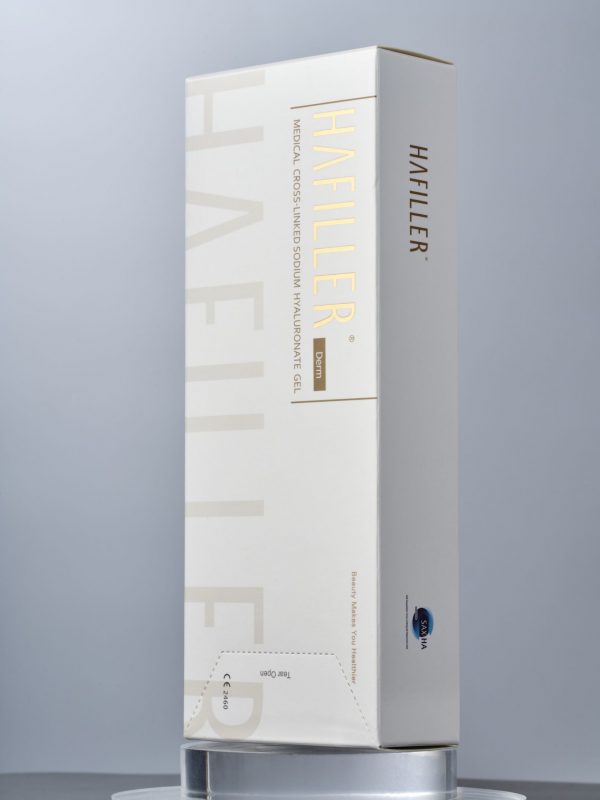
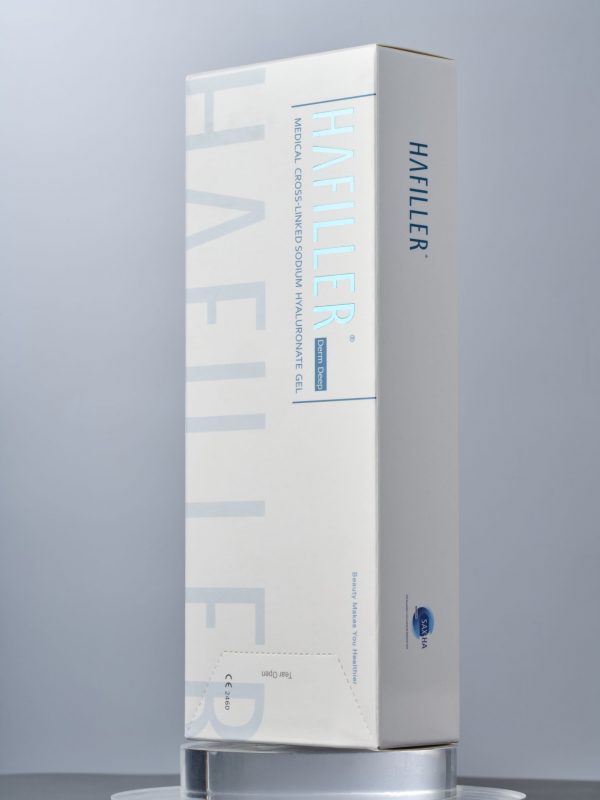
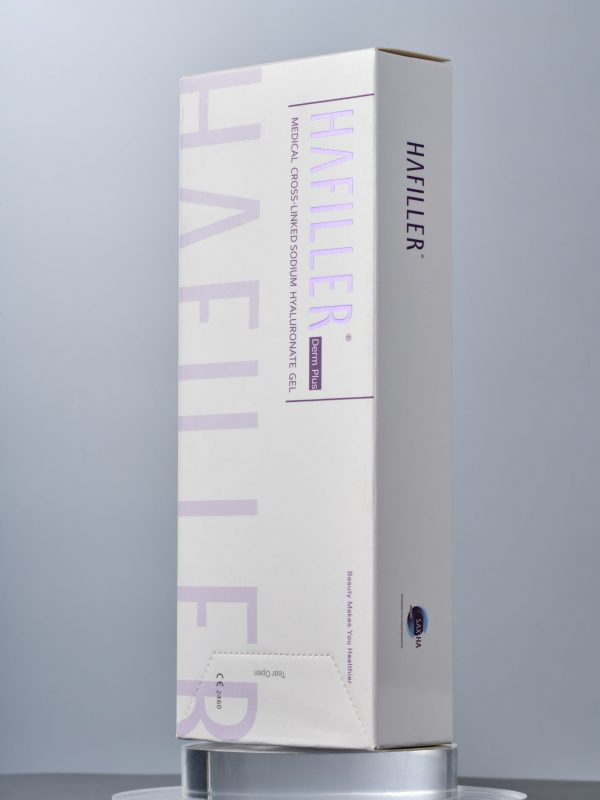
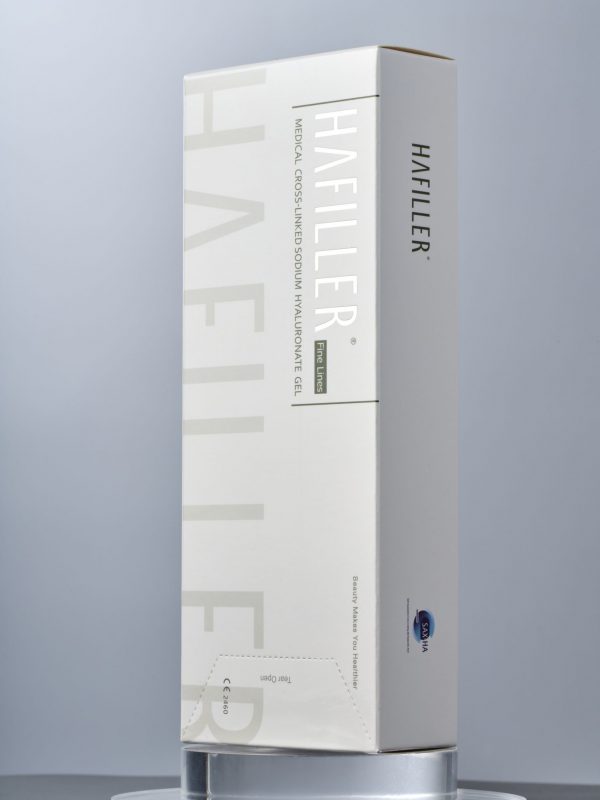
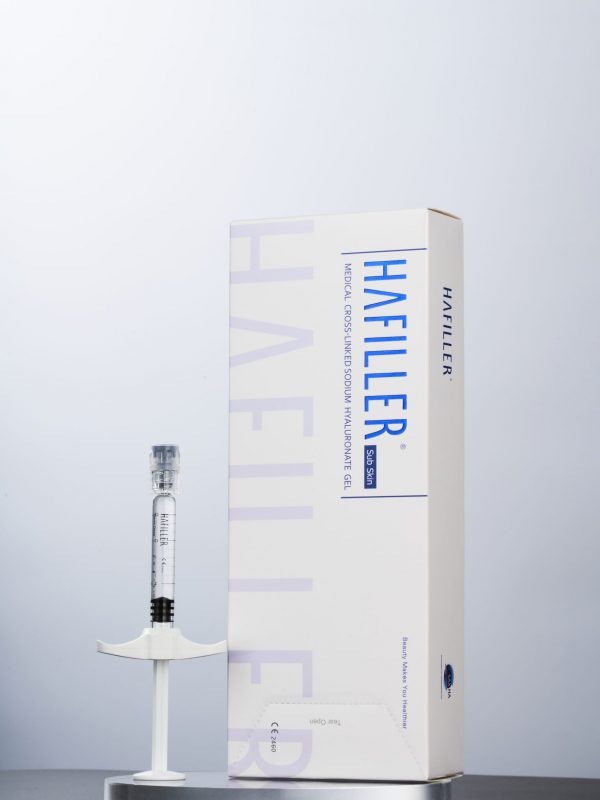
HAFILLER sodium hyaluronate injections are a series of dermal filler products researched and developed by Jingjia Medical. After years of dedicated research and development, Jingjia Medical have successfully extracted sodium hyaluronic from chicken combs which is the main material to produce sodium hyaluronic acid injection. HAFILLER provides you medical-grade sodium hyaluronate injection with high bio-compatibility and few side effects, which make it ideal for arthritis treatment, ophthalmic surgery aid and cosmetic surgery.
Hyaluronic acid (HA) is a naturally occurring substance found in the body's connective tissues, skin, and synovial fluid in joints. Sodium Hyaluronic Acid Injection has the following effects in different parts of body.
As a global dermal filler specialist and manufacturer, Jingjia Medical is one of the few factories in the world capable of producing injection-grade sodium hyaluronic acid. We also own the largest production base of hyaluronic acid raw materials worldwide, ensuring stable supply and consistent quality.
1.Strict Quality System
2.Multiple Quality Inspections
Every step — from raw material procurement to final packaging — undergoes multiple quality tests to ensure the safety and consistency of each product.
3.Clinically Verified Safety
Each year, Jingjia Medical conducts ongoing clinical follow-up studies to continuously provide updated safety data for patients around the globe. Supported by numerous clinical trials and doctor feedback, HAFILLER cross-linked dermal filler has been recognized by customers worldwide for its proven safety and reliability.
1.High-Purity Formulation
We select high-purity sodium hyaluronate and use proprietary purification technology to remove impurities while retaining active ingredients. This ensures each HAFILLER sodium hyaluronic acid injection has excellent purity, biocompatibility, and stability.
2.Effortless Injection Experience
Compared with leading Swedish brands, HAFILLER demonstrates a smoother extrusion force curve, allowing doctors to inject with greater precision and less resistance.
3.Long-Lasting Results
In in-vitro enzymolysis tests, HAFILLER shows shorter enzymolysis time than Swedish brands, proving its superior structural stability and long-lasting performance.
These qualities make HAFILLER sodium hyaluronate injections one of the best and longest lasting injectable fillers trusted by medical professionals around the world.
Hyaluronic acid (HA) is widely used in reconstructive surgery, ophthalmic procedures, and medical aesthetic applications due to its excellent biocompatibility and physicochemical properties. However, native HA is rapidly degraded in the body through enzymatic processes, resulting in a relatively short residence time and requiring frequent reinjections to maintain cosmetic outcomes.
To improve durability, cross-linking technology is used to transform HA into a stable cross-linked hyaluronic acid gel. Through the action of cross-linking agents, HA becomes a cohesive three-dimensional gel structure with enhanced viscoelasticity, mechanical strength, and resistance to enzymatic degradation.
This allows cross-linked hyaluronic acid dermal fillers to retain their shape and function for a longer time while maintaining excellent safety, injectability, and biocompatibility.
As the skin ages, collagen fibers gradually break down and fibroblasts lose their structural support, reducing their ability to synthesize collagen and elastin. Fibroblasts may also produce metalloproteinases, which further degrade existing collagen.
The function of cross-linked hyaluronic acid dermal fillers is to provide temporary structural support and improve the mechanical environment of the dermis. By restoring volume and promoting mechanical traction on fibroblasts, these fillers help stimulate fibroblast activity and support new collagen formation, contributing to visible improvement in skin texture and elasticity.
HAFILLER provides a full range of cross-linked hyaluronic acid dermal fillers designed to meet different aesthetic needs, from fine-line correction to deep structural support and volume enhancement. Each formulation features a specific particle size and rheological profile, enabling medical professionals to select the appropriate filler for subtle refinement, contour definition, or high-volume augmentation.
HAFILLER Model | |||||
Optimal Injection Area | Crow’s feet | Forehead | Deep wrinkles | Breast | Buttocks |
Indication | Very thin wrinkles, wrinkles around eye, crow’s feet, wrinkles around the contour of mouth. | Moderate wrinkles and skin folds, such as frown lines, lip enhancement. | Medium and Deep wrinkles and folds, such as nasolabial fold, lip enhancement, and face filling. | Breast and buttock augmentation; deep wrinkles; cheek, cheekbones, and chin volume expansion. | Correction of facial contours, include cheek, chin, and nose; breast and buttock augmentation. |
Particle size | 100-150μm | 150-280μm | 280-500μm | 500-1250μm | 1250-2000μm |
Needle size | 30G | 30G | 27G or 26G | 23G or 25G | 23G or 25G |
Effect Duration | 6-9 months | 6-12 months | 6-12 months | 9-18 months | 9-18 months |
Looking for bulk dermal fillers or OEM services? Contact us for flexible cooperation plans.

Zhejiang Jingjia Medical Technology Co., Ltd. was established in July 1995. It is a national high-tech enterprise integrating R&D, manufacturing and sales of biomedical materials.
Product center
Contact Us
Building 3, No. 1288-86, Jingwu Road, Linjiang Street, Qiantang District, Hangzhou, Zhejiang, China
Copyright © 2023 Zhejiang Jingjia Medical Technology Co., LTD Policy | ICP